
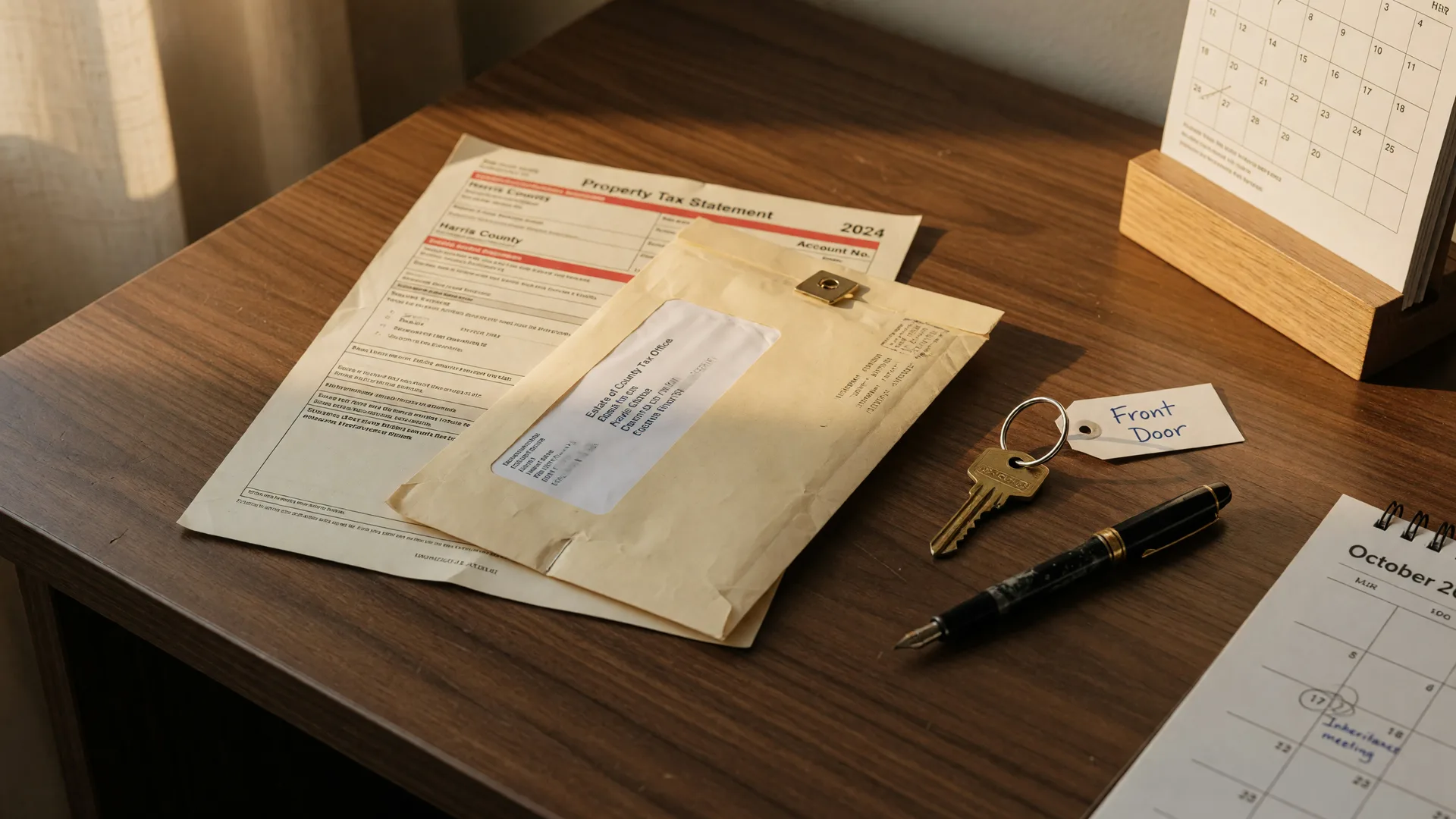
The property tax statements are in the mail across Texas this month, and if the estate you are handling includes a home, one of those envelopes may already be working its way to a desk or, worse, forwarding back to the county. Here is what executors and heirs need to know about the property tax bill on an inherited home, and why the January 31 deadline deserves a spot on the estate calendar. Many of the questions executors and heirs ask are answered in plain English on the FAQ page.
The tax bill does not pause for grief, and it does not pause for probate. Appraisal districts keep assessing the home every year, and the taxes keep accruing whether the house is lived in, sitting empty, or waiting on the court. In Texas, unpaid property taxes become a first lien on the home, and a bill left unpaid after February 1 goes delinquent and starts growing: a penalty for the first month, more each month after that, plus interest.
Who is responsible while the estate is open
While the home is in probate, the estate is responsible for the taxes. The executor, or the court-appointed administrator when there is no will, makes sure the bill is paid from estate funds before anything is distributed to the heirs. If the family later takes ownership together, the heirs share that responsibility from then on. The bill should never be assumed away; it is one of the estate's first-priority debts.
The homestead exemption catch
A homestead exemption can lower the bill, but the rule surprises many families: to claim a residence homestead exemption in Texas, someone must actually occupy the inherited home as their principal residence. If no heir moves in, the home stays at full market value on the tax rolls. That is often why the bill can jump after an inheritance, and our article on why your property tax bill can jump explains the mechanics. If an heir does make it their home, they can apply for the exemption themselves, no recorded deed required under the state's heir property rules. A surviving spouse in specific situations may continue an exemption the couple already had, so it is worth asking the appraisal district directly what applies to your family.
Put the date on the estate calendar
Bills are typically mailed in October and due by January 31, and the deadline stands even if the bill never reached anyone's hands. Call or write the appraisal district, confirm the account and the mailing address, and add the due date to the estate calendar so the payment is made from estate funds in the regular order.
Why it matters at closing
When the home sells, the closing settles the outstanding taxes from the proceeds, and the title company will want the account clean before the deed records. Handling the bill through the estate keeps the family out of penalty territory, protects the home from a tax lien, and keeps the closing on schedule.
No family should carry this alone. A certified probate real estate specialist walks the estate calendar with you, the tax date included, and coordinates with the estate's attorney and the title company so nothing quietly slips. Bring the tax statement to the first conversation; it tells us exactly where things stand.
Guy Courtney is a licensed real estate professional, not an attorney. Nothing on this site is legal advice. For advice about your specific situation, always consult a licensed attorney.