
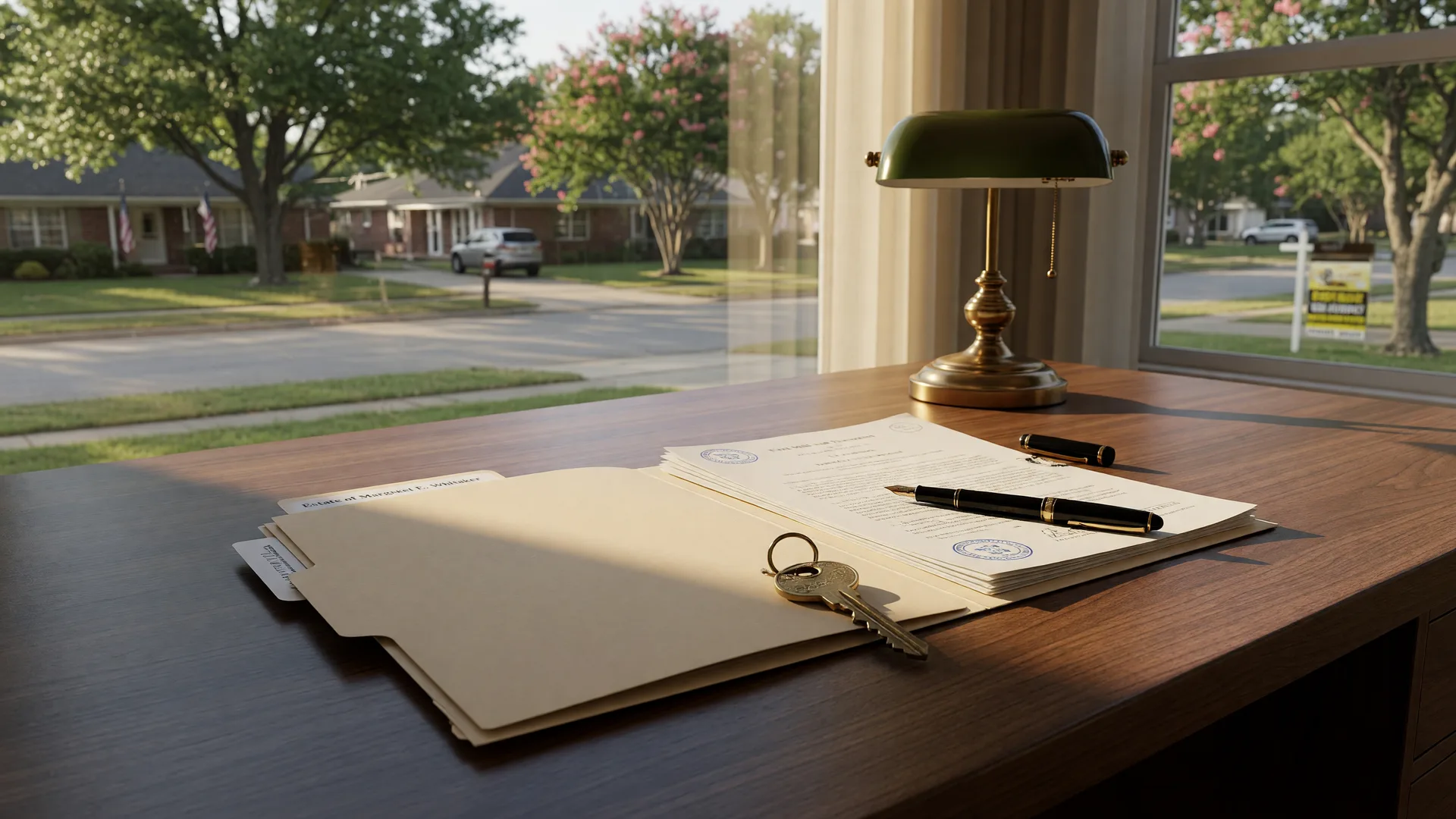
When a loved one passes away and the family home is part of the estate, the word probate can sound like a wall of court filings and waiting. In Texas it is real, and it matters: the estate opens in the county where the person lived, the court appoints someone with the legal authority to act, and only then can the home be sold. All of that process, and all of the paperwork that comes with it, exists for a reason. It protects the estate, the family, and the buyer, and it keeps the sale from coming apart months after closing.
Process is what gives someone the right to sell
Probate begins with a simple question: who is legally allowed to act for the person who died? The court answers it. It validates the will if there is one, appoints the executor the will names or the administrator the law selects, and issues the letters that prove the appointment: Letters Testamentary for an executor, Letters of Administration when there is no valid will.
Until that authority exists, no one can sign a valid contract on the property. Not the neighbor who offered, not the well-meaning relative, not the person holding the keys. This is not caution for its own sake. A title company will not insure a sale without that authority in place, and a contract signed too early can leave the estate with legal fees and a title problem that has to be undone later.
The paperwork that carries the sale
Once the estate is organized, the paperwork does not shrink, it takes its proper place. The executor collects the documents that tell everyone what the home is, what it owes, and what it is worth:
- The death certificate, which the family will need in dozens of places beyond the sale
- The will and the court's letters, which establish who acts for the estate
- The deed or title history, which proves the decedent owned the home
- The mortgage statement, because the note usually keeps performing and is paid from proceeds at closing
- The insurance policy, which may need to become vacancy-aware once the house sits empty
- The property tax account, because county tax bills keep accruing while the estate is open
Each of these documents does a job. Together they let the estate price the home honestly, keep it insured and protected, and close on a schedule the family can live with instead of one the process forces.
The deed at the end is the whole point
At closing, title transfers by an executor's, administrator's, or trustee's deed. The title company verifies the court appointment and, when there is a will, the clause that grants the power to sell. When that deed records, the buyer owns the home with clean title, and the estate can be wrapped up: mortgage, taxes, and estate expenses settled from the proceeds, and whatever remains distributed to the heirs per the will or intestate succession.
Skip a step in that chain and the closing is where it surfaces, often weeks late and at real cost. Do the paperwork in the right order, and the closing is the moment the family finally exhales.
What changed for 2026, and what did not
The tax picture for estates is calmer in 2026 than it nearly was. The federal estate tax exemption, which had been scheduled to drop on January 1, 2026, was instead made permanent at $15 million per person, so only the largest estates owe federal estate tax at all. Texas remains a state with no estate tax, no inheritance tax, and no gift tax.
What 2026 did not change is the process and the paperwork. The county courts still run the same sequence, the letters are still required before anyone can sell, and the deed still has to be right. Confirm the federal rules that apply to your family's estate with a qualified estate or probate professional, because the estate's own situation, not a headline, decides what applies.
Why an agent who knows the paperwork matters
None of this is easy to carry alone, especially while the family is grieving. An agent who does only this work knows which documents matter, which deadlines are real, and which steps can run in parallel. Guy coordinates with the executor, the estate's attorney, and the title company so the authority, the letters, and the deed are handled in the right order, and he prices and markets a home that may be dated or vacant without over-investing in it.
“I have been an executor and closed an estate myself. I know what this season asks of you, and I show up for it.”
Guy Courtney Steib, The Probate Guy
If your family is facing a probate sale, the paperwork can wait long enough for one good conversation. Tell Guy where things stand and you will get a straight answer about the steps, the timeline, and what actually matters, with no pressure to list. This article is general guidance and not legal advice; a qualified Texas probate attorney should guide your estate. For the real-estate side, Guy is ready when you are.
Disclaimer: this website provides general information only and is NOT legal advice. For advice about your specific situation, always consult a licensed attorney. Probate is a legal process handled by the county courts in Texas, and every estate is different.